
resources
Is Your Crypto Activity
Taxable?
The 5 crypto tax questions Canadians ask me most,
answered in plain English.
These are the questions that land in my inbox every week and
came up again and again during my livestream with Bitcoin Well.
Most of them come down to one thing: the CRA sees your crypto
differently than you do.

Question 1:
I Only HODL. Do I Have to Report Anything
to the CRA?
This was the most-asked question during my Bitcoin Well livestream, and the answer is mostly good news.
Buying crypto with Canadian dollars and holding it isn't a taxable event. There's no line on your return for
crypto you own, and no minimum amount that makes holding taxable.
The catch is what counts as holding. Swapping one coin for another isn't HODLing, and neither is earning
staking rewards, even if you never cash out to CAD.
One more thing for larger stacks. If the total cost of crypto you hold outside Canada, such as on a foreign
exchange, was more than $100,000 at any point in the year, you may need to file Form T1135. It's a reporting
form, not a tax, but the penalties for missing it add up quickly.

crypto cheat sheet
Is It Taxable?
Want the quick version?
My free cheat sheet shows what the CRA
taxes and what it doesn't, on one page.



Question 2: Are Crypto-to-Crypto Swaps Taxable in Canada?
Yes. This is the answer people push back on most, because no Canadian dollars ever hit their account. Totally
understandable, but not how the CRA sees it.
To the CRA, a swap is a trade of one property for another. You've disposed of the first coin at its value that day,
so any gain or loss is reported.
Here's how it plays out. Anna bought 1 ETH for $1,500. Months later she swaps it for SOL when that ETH is
worth $2,000. Anna has a $500 capital gain, even though she never cashed out. Her SOL now has a cost of
$2,000, which matters the day she sells it.
The same rule applies when you swap into a stablecoin or buy something with bitcoin. It also works in your
favour: a swap at a loss creates a capital loss you can use against your gains.
Question 3:
Why Does My Crypto Tax Report Show Gains I
Never Made?
Jeff came to me with a Koinly report showing a $40,000 gain. He's an engineer in Calgary who has been
staking and trading for six years, and he knew he hadn't made anywhere near that much.
The first thing I did was compare the balances in Koinly with what he actually held. Koinly showed most of his
ETH as sold, when it was sitting safely on his Ledger. Every transfer to his cold wallet had been recorded as a
sale.
Once we matched both sides of those transfers, his gain dropped to about $9,000. His first words were, "I
almost filed it the way it was."
Here's why it happens. Say you move BTC from Kraken to your Ledger. If the Ledger isn't connected properly
in your software, the coins leaving Kraken look like they vanished. Then BTC appears on the Ledger with no
purchase history, so the software assumes you bought it at today's price. When you sell later, the report
calculates a gain that never happened.
Moving crypto between your own wallets isn't taxable. The fix is making sure your software sees both sides of
every transfer.


crypto records worksheet
Map Your Wallets Before
Your Software Does It Wrong
List every wallet and exchange you've used
on one page, so every transfer has two sides
and your report starts from the truth.


Question 4:
Which Purchase Price Does the CRA Use When
I Sell Crypto?
A crypto investor asked me this: "If I bought five times before selling, which buy does the CRA use?" The
answer is none of them on its own.
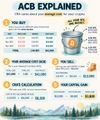
First, you're not taxed on the full amount you cash out. You're taxed on the gain, which is your sale price
minus your adjusted cost base (ACB) and any selling costs.
Canada doesn't use your first buy or your most recent one. It uses your average cost across all your wallets
and exchanges.
Say you buy 1 BTC at $1,000 and another at $890. Your average cost is $945 per BTC. If you sell 1 BTC at $800,
you have a capital loss of $145, based on the average.
The CRA also expects you to use a reasonable method and stick with it year to year. Switching methods or
pricing sources depending on what helps you that year is where scrutiny starts.

crypto TAx Strategy call
Not Sure Your Numbers
Are Right?
When your crypto is spread across several
exchanges and wallets, average cost is where
reports quietly go wrong.
In a one-hour strategy session, we look at your
setup together, and you leave knowing whether
your numbers hold up before you file.



Question 5:
Are Staking and Mining Rewards Taxed
When I Receive Them?
A client told me recently, "I'm only mining a bit of BTC. I didn't think it really counted." It's a reasonable
assumption. Small amounts land quietly in your wallet, and nothing feels like a tax moment.
The CRA treats crypto you earn as income. Its business income guide (T2125 guide - see p.11) names trading,
mining, staking and yield farming directly as activities to report.
There are two layers to keep in mind. When the reward lands in your wallet, its value that day is income.
When you sell it later, you have a capital gain or loss measured from that same value.
Whether the income is reported as business income depends on how much you do and how you do it. Small
or large, though, it still counts.
How to File Your 2026 Crypto Taxes in Canada
Once you know what's taxable, the next step is getting it onto your return. In this video, I walk through how to
file crypto taxes in Canada step by step.
How To File Your 2026 Crypto Taxes
Bitcoin Well's Guide to Bitcoin Taxes
For a longer walkthrough of capital gains and ACB, I helped review this guide for Bitcoin Well.
Read Bitcoin Taxes in Canada on Bitcoin Well
Is there a minimum amount before I have to report crypto?
No. Every taxable event counts, whatever the size. Small swaps and small staking rewards are reported the
same way as large ones.
Can the CRA see my crypto?
Under the new CARF reporting rules, platforms collect more detailed user information starting in 2026, which
can be shared with the CRA.
CARF: Can CRA See My Crypto?
crypto TAx Strategy call
Want Answers for Your
Own Wallets?
These answers cover the general rules. In a one-
hour strategy session, we apply them to your
own wallets and history, and you leave knowing
where you stand with the CRA.
Can I claim crypto I lost in a scam or a collapsed
exchange?
Sometimes. It depends on what happened and what records you have. My free rug pulls guide shows which
losses are worth pursuing
Crypto Scams Video
Celsius Exchange Bankcruptcy
cra audit readiness checklist
Got Caught in a Rug Pull?
Find out whether your loss is worth claiming
before you file.
My free guide explains how the CRA views scam
losses and the most common reasons claims
get rejected.